

Descripción. Haz clic para editar.

Descripción. Haz clic para editar.
Geology
It is oriented approximately from west to east, according to a
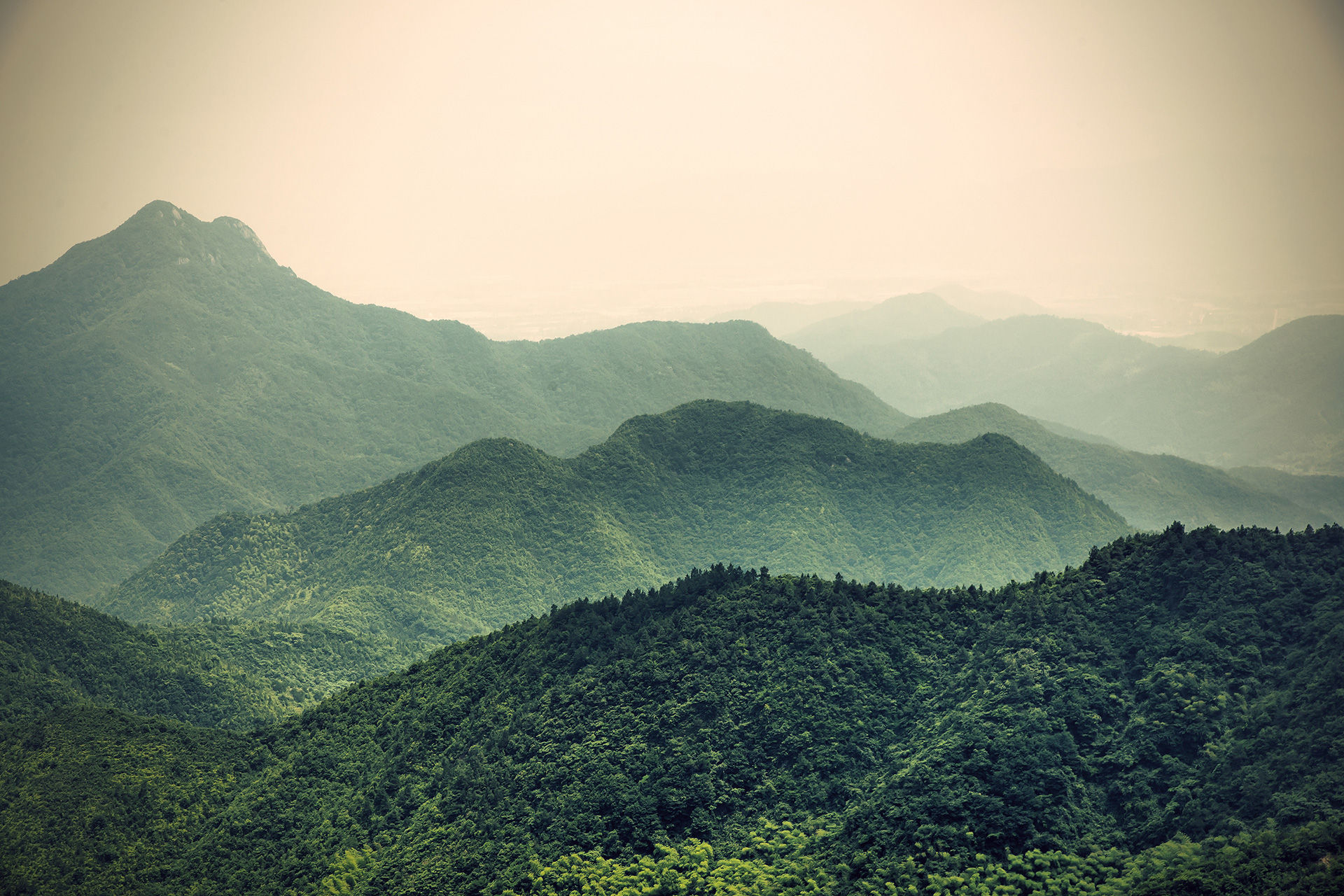
guideline northwest-southeast and a length of about 9 kilometers. Constituted by cretaceous limestones in its middle part and eocénicas in the upper section, the tectonic action has cleared a violent relief, perfectly defined in its morphology of slopes of strong inclination and rocky cusps. A ridge crosses the mountain range in almost all its length, with a sustained average height of 900 m., That has its greater elevation in the Bèrnia, of 1.129 m. above sea level.
The Prebètica Serralada or Prebètic System is troba to the eastern part of the Bètic System that is des Martos, from the province of Jaén, fins to the interior of the Cap de la Nau to the Marina Alta, of the província d ' Alacant
A saline diapir is a structure formed by the slow intrusive rise of a plastic mass of evaporites (halite and gypsum) and clays that deform and cross the overlapping rock layers. It is a multiphasic and complex diapir whose activity should have started during the Cretaceous although its maximum activity ascensional took place about 18 million years ago, coinciding with the beginning of the folding of the Alicante Prebetic. It is important to take into account (for geotechnical reasons and environmental risks) that the
Diapirism is still active as evidenced by the deformation of quaternary materials observed, for example, at the entrance of the first tunnel of the train.
Deformation of rocks: Rocks, like any other material, are deformed by the action of external forces. We do not capture that deformation, but we can know when a rock is deformed. By studying the deformation we can know how the efforts that produced it have been and, therefore, reconstruct the tectonic activity
passed in a region.
Elastic deformation: the material is deformed, but when the effort ceases, the deformation disappears.
Plastic deformation: the deformation is maintained even if the effort disappears.
Fragile deformation: the material fractures in response to stress. Like the previous one, it is also irreversible. Folds: when the deformation suffered by the rocks is plastic. The materials are folded giving us an idea of what forces folded them.
The conditions of mechanical instability existing at the apex of that island caused large rock masses (olistolitos) to slide, especially towards the north (due to the push of the Alborán block in that direction), and to settle on the seabed above the Miocene marl This sowing of large masses of older rocks (sometimes of kilometric size) on more modern materials explains the presence of Eocene limestones on marls
Miocene, which apparently violates a basic stratigraphic principle such as the superposition of the strata. Examples of this apparent stratigraphic anomaly are the Peñón de Ifach, the Sierra de Oltá and other outcrops located north of the Sierra de Bernia and Aixortá, as is the case of the great olistolitos located in Tárbena and its district.
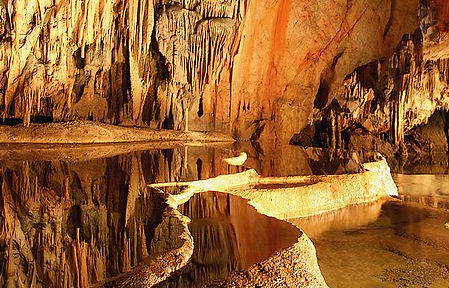
Karstic relief, 1 carst, carsto or carso is known as a relief caused by chemical weathering of certain rocks, such as limestone, dolomite, gypsum, etc., composed of water-soluble minerals. They are called karst sciences to the set of disciplines that investigate it.
The chemical reactions responsible for the dissolution of carbonates are the following:
Dissolution of carbon dioxide:
CO2 + H2O ↔ H2CO3
Aqueous dissociation of carbonic acid:
H2CO3 + H2O → H3O + + HCO3-
Acid attack of carbonates ("calcareous"):
H3O + + CaCO3 ↔ Ca2 + + HCO3- + H2O
Equation of balance:
CO2 + H2O + CaCO3 ↔ Ca2 + + 2 HCO3-
The entrance of the cave is through a mouth 1.6 m high by 2 meters wide. We will pass under a small hole about 3 mi deep into a narrow gallery of about 21 m which soon begins to narrow to reach, at approximately 15 m, a section of a meter of only 0.6x1, because we will have to go quite kneeling At the exit of the tunnel, 2.5x2.2 m, there is a funnel-shaped room that opens onto a huge triangular mouth 15 m high by 25 m wide, a gigantic window to the Mediterranean, sublime, where the contrast of light and colors already justify the excursion: at our feet, we find Altea, Sierra Helada, Benidorm, Puig Campana, Ponoig or Aitana, but above all the sea. Here it is perfectly appreciated how the character of the giant natural barrier of the mountains is one of the decisive factors of the privileged microclimate that municipalities such as Altea and Benidorm have.
Upper Jurassic
They were located in the large continent of Pangea in Cap Negret about 100 m of white limestone deposited about 150 Ma ago on a carbonated platform
shallow marine. They do not appear in the Altea area but at the foot of the Serra Gelada and in the
Puig campana.
Lower Cretaceous
They also do not crop up in the Altea region but they constitute the main framework of the Serra Gelada.
They were deposited between 125 and 100 Ma on a ramp-type marine carbonate platform.
The rocks are formed inside the Earth. When they ascend to the earth's surface, conditions vary. This causes physical or chemical transformations in the rocks. These transformations are known as weathering.
Weathering is the alteration of a rock by the action of the Atmosphere, the Hydrosphere or living beings. This alteration occurs in the same place where it has surfaced on the surface, without transporting materials. If there was wear of the rock and fragments transported to another place, we speak of erosion.
The types of physical weathering are:
Thermoclasticity
The materials expand or contract as the temperature varies. In places where the temperature differences between day and night are great, the rocks crack and end up breaking into fragments.
Gelifraction
Have you ever found a soda bottle exploded inside your fridge freezer? When the water freezes it increases in volume. The water that has been introduced into the cracks of the rocks, when it freezes, exerts a pressure large enough to increase the cracks and break the rocks.
Haloclasticity
Due to the heat, the water that is in the cracks of the rocks evaporates, precipitate the mineral salts that were dissolved. When they crystallize, they exert pressure on the walls of the crack, breaking the rock.
Bioclasticity
Living beings are capable of destroying rocks. The roots of a tree, which are introduced into the cracks of rocks, the lichens on the surface of rocks or animals that excavate the earth, including Man, are examples of this.